Shneiderman
A saint of the lore, and the keeper of the hand and the eye
| The man | who he is |
| The compound | his thought in one breath |
| The dial | try it with your own hand |
| The hand | direct manipulation |
| The rules | eight golden ones |
| The eye | overview first |
| The two axes | tools, not teammates |
| The method | how he thinks |
 The man
Ben Shneiderman is an American computer scientist. In 1983 he founded the Human-Computer Interaction Lab at the University of Maryland, where he is now a professor emeritus. Much of what a screen feels like today began in his lab: the highlighted link you click, the touchscreen keyboard that types when your finger lifts, the sliders that filter a search as you drag them, and the treemap, which shows a whole hard disk as nested rectangles. He is also a photographer, and spent decades taking portraits of the people in his field.
He asked one question all his life, at an ever larger scale: how can a person stay the one who sees, chooses and answers for the result?
The compound
Show the thing. Let the hand act on it. Answer at once. Let it be undone. Keep the person in charge, so the person can take responsibility.
Everything else he wrote is that sentence applied to something new: the screen, great heaps of data, every citizen, invention, and at last the machines that act on their own.
The dial

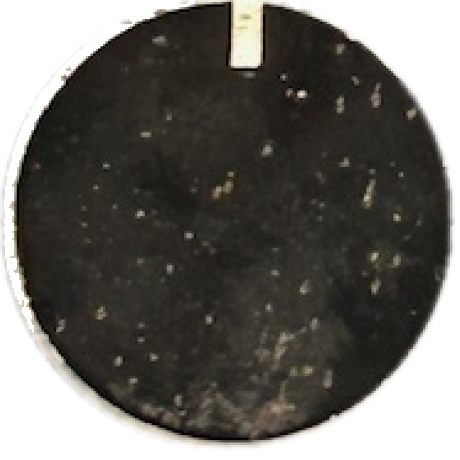

Turn the knob. The number answers at once, the light shows it heard you, and the button takes the last turn back.
The hand
In 1982 he gave a name to what the best programs of the day had in common: direct manipulation. He boiled it down to three principles:
- Keep the objects you care about in view, all the time.
- Act on them by pointing and pressing, not by typing commands.
- Make every action quick, small and reversible, with its effect visible at once.
He counted "at once" as a tenth of a second. When nothing is hidden and everything can be undone, beginners learn quickly, experts work fast, and fear leaves the room. A person who can see and steer a system can also fully answer for what it does.
The rules
His textbook carries the Eight Golden Rules of interface design:
- Strive for consistency.
- Seek universal usability.
- Offer informative feedback.
- Design dialogues to yield closure.
- Prevent errors.
- Permit easy reversal of actions.
- Keep users in control.
- Reduce short-term memory load.
He calls them a starting point, to be tuned for each craft. The dial above keeps three of them: feedback, reversal and control.
The eye
His most repeated line is a mantra for anyone who shows information:
Overview first, zoom and filter, then details-on-demand.
In the 1996 paper that introduced it, he printed it ten times in a row. He believed the eye is our most underused gift. While screens showed forty icons, he asked for four thousand items, arranged so a person could see every possibility at once. In one demonstration a strange line of dots on a chart turned out to be a single drug raid in one county. No program had been told to look for it. The eye found it.
This page tries to obey him. The index at the top is the overview, and each section is a detail you can jump to.
The two axes
He has always distrusted machines dressed as people. He thinks words like "smart" and "intelligent" mislead the people who build things, and he says a computer should be a tool, not a teammate.
For years designers drew one line, with human control at one end and automation at the other, so that more of one meant less of the other. Shneiderman split that line into two axes and asked for both: high automation and high human control together. A good camera does everything for you, yet you still choose the moment and press the button.
The method
- Begin with a real annoyance. The treemap came from a full hard disk shared by fourteen people.
- Say who and what. Name the people and their tasks before designing anything.
- Split the false trade-off. When two goods seem opposed, give each its own axis and aim for both.
- Cross two lists into a grid. Each cell becomes a question.
- Shorten it to a chant, then repeat it.
- Prove it with something that works.
- Give it back. His creative cycle runs collect, relate, create, donate.
In Emerald City his way of thinking is called Shneidermanism, and he is its second saint, after Tim Tyler.

Shneidermanism · jffmedia.com/shneiderman
The dial, lights and stone are from the Druid Grove